Preface: I'm no Scrooge during the holidays. My house is promptly decked with boughs of holly, blinky fiber optic lights, and tons of friggin' cheer immediately in the days after Thanksgiving. But being in the "biz" does expose one to an inordinate amount of repetition as we kick off the holidays for thousands of you out there. So we may play jazz instead of Jingle Bells on our stereos, and have a fondness for hot buttered rum. But hey- Happy Friggin' Holidays, and all the best in the New Year!!
Grinchy Holiday Musings:
Shopping in a store playing holiday music: Has anyone done a study of professional musicians' spending habits during the holidays? I bet catalog/internet sales are disproportionally WAY WAY up compared to other employees in other fields, with the possible exception of retail employees. Ah, the bliss of shopping in merciful holiday jingle-free silence with only the accompaniment of your fingers click,click, clicking away.
Dining in a restaurant playing holiday music: One time a bunch of us went out to eat at the end of a weekend of 6 Christmas Pops concerts. Not surprisingly, the soundtrack playing at the restaurant contained about 90% of the program we had done. Luckily, the manager was sympathetic to our request to change the music to something else. "What," he asked, "you girls in retail?"
Conductors with big heads and no arms: No, this is not some snide figurative conductor joke. I HAVE been conducted many a time by Santa (big head and belly) and Frosty the Snowman (big head, no arms). Frosty's the stuff of nightmares...those soulless licorice eyes staring at you...and as to the beat, are you supposed to follow the claw-like tree branch arm, or the carrot nose? And all that wet, wet snow being flung everywhere, landing on your instrument, eating away the varnish... Actually, I have a fond memory of the last time we were conducted by Frosty because the very next person to conduct us was Former President, Nobel Peace Prize winner Jimmy Carter. And he's not scary at all. Smiley and full of peanutty goodness.
The little match orchestra: Remember that really sad story of The Little Match Girl? If only the Houston Symphony had matches to burn on stage last Thursday when we were playing outside at the Woodlands Pavilion as the cold front was coming in. We had heaters blowing through duct pipes at our feet, but remember in science class? Hot air rises, cold air sinks? With cold air coming onto the stage from a huge open space- the outdoors- and hot air being blown onto the stage at floor level, a circular air/wind motion was created, in effect warm and cold fronts. The hot air circulating upward and forcing the cold air to circulate downward made for extreme weather conditions on stage. Instruments were cracking, cold, stiff muscles were cramping, and viruses were taking hold. To make matters worse, the backdrop was of giant snowflakes. For this Little Match Orchestra, perhaps chestnuts roasting on an open fire would have been a warmer choice.
Tuesday, December 12, 2006

Wednesday, November 22, 2006
Pass the yams
Since this is the week of Thanksgiving and the start of all the traditional holiday festivities, I thought I'd demystify some of the common traditions that exist in a symphony orchestra; and more specifically, the string section.
Besides being divided into first violins, second violins, violas, cellos, and basses, we are also divided between INSIDE and OUTSIDE. This means we sometimes have to play different "divisi" parts in the music. In addition, the "inside" players are the ones that usually have to turn the pages while the "outside" players are still playing. The inside players also traditionally write things in the parts at the request of the conductor or section leader (doodling in the part, while frowned upon by the Orchestra Librarian, is done by either player as well as hopefully erased by either player). Said requests (i.e. "slower" "faster" "softer" "louder" etc) are written either in Italian (most common), English, German or French, depending on the composer of the piece, or the spoken language of the orchestra. There are also certain non verbal markings, untaught in music school, that have become traditional over time. These range from arrows pointing forward or backward for "speed up" or "slow down", eyeglasses for "look up at the conductor, you @#&*!!," slashes for figuring out rhythms, and my favorite, the all-purpose squiggle, which can usually mean either "slow down" or "look up." Other common doodles I've seen in music over the years are usually conductor-related and violent, involving guns, knives, skull-and-crossbones, and dead smiley faces/hangmen.
Other interesting string player traditions you may see in a concert: the old switcheroo, the quick change/sneak off, the bow tapping, and the spin. The "old switcheroo" occurs when either the concertmaster (or any other principal string player) or the violin soloist has broken something, most commonly a string. If it is a string broken by the concertmaster, he/she will switch his/her violin with his/her stand partner's violin (the guy on the "inside"). Then, depending on what kind of a piece is being played and how close to the end of the concert it is, the stand partner can either elect to heroically play the fiddle with 3 strings, or pass it back to the rear of the section. In the rear of the section usually sits the musician that carries the spare strings for such an emergency. This musician/pit crew guy will pass his/her instrument up to the 2nd chair player, and then quickly replace the string. The switcheroo gets even more complicated when it is the soloist, for then the change is with the Concertmaster/principal string player, setting the whole above routine in motion but adding an extra player to the mix. Also, the pit crew guy in the back doing the change then has the added anxiety of having to change Mr. Bigshot Soloist's Million Dollar Stradivarius, quickly and without scratching or dropping it, knowing the soloist desperately wants nothing more than their own instrument back as soon as possible, basically having the FATE OF THE ENTIRE CONCERT IN HIS HANDS....
The "quick change/sneak off" is what happens when the pit crew guy forgets to/doesn't bring extra strings on stage and so then has to sneak off unobtrusively with 3000 people watching to make the change backstage.
"Bow tapping" is how we applaud soloists or anyone needing validation but can't use our hands because they are full of instruments. It looks weird at first and makes absolutely no noise, since we are just waving our bows in the air.
The "spin" happens usually in the lower strings (cellos/basses) but also in the violas but hardly ever in the violins. In the cellos/basses, it involves twirling the instrument at the endpin while holding it lightly at the neck. In the violins/violas, its slightly more difficult and scary because we don't have that endpin and so must form a closed circuit with the thumb and 1st or 2nd finger of our left hand and then use another finger and a wrist flick for the impetus to twirl it mid air and not drop it. This could explain why most high-strung (ha-ha-- get it? High -STRUNG… their strings are higher so...ah, forget it) violinists WON'T do it and laid back, thrill-seeking violists, will. WHEN do we do it? Well, you just know in your bones when the right moment comes along and a little spin is needed for emphasis. One spot where it always happens traditionally, throughout the world, is rehearsal letter J in Leroy Anderson's "Sleigh Ride."
Any questions about other mystifying traditions you see on stage? Let me know- and have a Happy Thanksgiving!
Besides being divided into first violins, second violins, violas, cellos, and basses, we are also divided between INSIDE and OUTSIDE. This means we sometimes have to play different "divisi" parts in the music. In addition, the "inside" players are the ones that usually have to turn the pages while the "outside" players are still playing. The inside players also traditionally write things in the parts at the request of the conductor or section leader (doodling in the part, while frowned upon by the Orchestra Librarian, is done by either player as well as hopefully erased by either player). Said requests (i.e. "slower" "faster" "softer" "louder" etc) are written either in Italian (most common), English, German or French, depending on the composer of the piece, or the spoken language of the orchestra. There are also certain non verbal markings, untaught in music school, that have become traditional over time. These range from arrows pointing forward or backward for "speed up" or "slow down", eyeglasses for "look up at the conductor, you @#&*!!," slashes for figuring out rhythms, and my favorite, the all-purpose squiggle, which can usually mean either "slow down" or "look up." Other common doodles I've seen in music over the years are usually conductor-related and violent, involving guns, knives, skull-and-crossbones, and dead smiley faces/hangmen.
Other interesting string player traditions you may see in a concert: the old switcheroo, the quick change/sneak off, the bow tapping, and the spin. The "old switcheroo" occurs when either the concertmaster (or any other principal string player) or the violin soloist has broken something, most commonly a string. If it is a string broken by the concertmaster, he/she will switch his/her violin with his/her stand partner's violin (the guy on the "inside"). Then, depending on what kind of a piece is being played and how close to the end of the concert it is, the stand partner can either elect to heroically play the fiddle with 3 strings, or pass it back to the rear of the section. In the rear of the section usually sits the musician that carries the spare strings for such an emergency. This musician/pit crew guy will pass his/her instrument up to the 2nd chair player, and then quickly replace the string. The switcheroo gets even more complicated when it is the soloist, for then the change is with the Concertmaster/principal string player, setting the whole above routine in motion but adding an extra player to the mix. Also, the pit crew guy in the back doing the change then has the added anxiety of having to change Mr. Bigshot Soloist's Million Dollar Stradivarius, quickly and without scratching or dropping it, knowing the soloist desperately wants nothing more than their own instrument back as soon as possible, basically having the FATE OF THE ENTIRE CONCERT IN HIS HANDS....
The "quick change/sneak off" is what happens when the pit crew guy forgets to/doesn't bring extra strings on stage and so then has to sneak off unobtrusively with 3000 people watching to make the change backstage.
"Bow tapping" is how we applaud soloists or anyone needing validation but can't use our hands because they are full of instruments. It looks weird at first and makes absolutely no noise, since we are just waving our bows in the air.
The "spin" happens usually in the lower strings (cellos/basses) but also in the violas but hardly ever in the violins. In the cellos/basses, it involves twirling the instrument at the endpin while holding it lightly at the neck. In the violins/violas, its slightly more difficult and scary because we don't have that endpin and so must form a closed circuit with the thumb and 1st or 2nd finger of our left hand and then use another finger and a wrist flick for the impetus to twirl it mid air and not drop it. This could explain why most high-strung (ha-ha-- get it? High -STRUNG… their strings are higher so...ah, forget it) violinists WON'T do it and laid back, thrill-seeking violists, will. WHEN do we do it? Well, you just know in your bones when the right moment comes along and a little spin is needed for emphasis. One spot where it always happens traditionally, throughout the world, is rehearsal letter J in Leroy Anderson's "Sleigh Ride."
Any questions about other mystifying traditions you see on stage? Let me know- and have a Happy Thanksgiving!
Friday, October 20, 2006
Hold the oboe
Lots of things have been substituted lately. When this week's scheduled conductor, Jeffrey Kahane, had to cancel at the last minute due to illness, conductor Christoph Campestrini stepped in. This sort of substitution happens rarely in classical music, not as much as it seems to happen in the theater, where understudies are called on more frequently. Some notable examples of last minute substitutions that led to huge careers for the substitutes include that of a young Leonard Bernstein for an ailing Bruno Walter, and the more dishy story of one of the greatest conductors of the early 20th century, Arturo Toscanini.
Toscanini was born in Parma, Italy and studied cello. In 1886 he was touring South America as a cellist with the orchestra of an opera company. While presenting Aida in Rio de Janeiro, the orchestra's conductor was booed by the audience and forced to leave the podium. Although he had no orchestral conducting experience, the 19 year old Toscanini was persuaded to take up the baton, and led a magnificent performance completely from memory. The rest, as they say, is history.
Back to Campestrini, who is from Austria and used the word "spicy" a lot in rehearsal, which got me thinking about that other most recent substitution in the news; that is, of swiss chard for poisonous e. coli spinach. Which then led me to some musing about a hypothetical concert in which you could substitute whatever you wanted to create your own version of the piece. Sort of like that Burger King commercial that (ok, dating myself here) I grew up with- "hold the pickle, hold the lettuce, special orders don't upset us, all we ask is that you let us serve it your way..."
So there you'd be, a whole orchestra in front of you, to basically do your bidding like customizing your entree at a restaurant (substitutions $3 extra, sharing $9, no doggie bags). "Uh, yes, I'll take the Beethoven 5, low fat, so hold the oboe; substitute extra spicy alto sax. I'm watching carbs, so could you put in only half of the double basses and leave them on the side, and instead of violas I'll have a side order of bongos." "And no contrabassoon, thanks."
Toscanini was born in Parma, Italy and studied cello. In 1886 he was touring South America as a cellist with the orchestra of an opera company. While presenting Aida in Rio de Janeiro, the orchestra's conductor was booed by the audience and forced to leave the podium. Although he had no orchestral conducting experience, the 19 year old Toscanini was persuaded to take up the baton, and led a magnificent performance completely from memory. The rest, as they say, is history.
Back to Campestrini, who is from Austria and used the word "spicy" a lot in rehearsal, which got me thinking about that other most recent substitution in the news; that is, of swiss chard for poisonous e. coli spinach. Which then led me to some musing about a hypothetical concert in which you could substitute whatever you wanted to create your own version of the piece. Sort of like that Burger King commercial that (ok, dating myself here) I grew up with- "hold the pickle, hold the lettuce, special orders don't upset us, all we ask is that you let us serve it your way..."
So there you'd be, a whole orchestra in front of you, to basically do your bidding like customizing your entree at a restaurant (substitutions $3 extra, sharing $9, no doggie bags). "Uh, yes, I'll take the Beethoven 5, low fat, so hold the oboe; substitute extra spicy alto sax. I'm watching carbs, so could you put in only half of the double basses and leave them on the side, and instead of violas I'll have a side order of bongos." "And no contrabassoon, thanks."
Thursday, October 05, 2006
1001 nights
This week while sitting in rehearsal after a 2 hour long marathon training run, my over-oxygenated brain cooked up a fantasy that incorporated two weeks' repertoire, and my current favorite marketing campaign .
The scene: The palace of the Sultan
The time: once upon a Long Ago
The story: Scheherazade is the daughter of the Grand Vizier to Sultan Shahriyar. The sultan's first wife had betrayed him, and in anger and grief he not only executed her but vowed to marry a woman each night and kill her the next morning. The sultan's cruel order was obeyed for three years, until Scheherazade conceived a plan to stop him and convinced her father to offer her as the sultan's next wife. Her plan was to tell him such an enthralling, cliff-hangerful story, that every night instead of choppin' off her noggin, he would beg for another. This would hopefully continue night after night, until the sultan would finally be convinced of her loyalty and rescind his death sentence.
But Scheherazade was just an ordinary Grand Vizier's daughter, not a paid celebrity. So to help tell her story, she hired celebrity singer/songwriter Burt Bacharach.
Scheherazade speaks:
Sinbad the sailor tells how he grew restless of his life of leisure, and set to sea , "possessed with the thought of travelling about the world of men and seeing their cities and islands." Accidentally abandoned by his shipmates, he finds himself stranded in an inaccessible valley of giant snakes and even more gigantic birds, the rocs, which prey upon them.
Burt sings:
Why do birds suddenly appear
Everytime you are near?
Just like me, they long to be
Close to you.
Scheherazade speaks:
The floor of the valley is carpeted with diamonds, and merchants harvest these by throwing huge chunks of meat into the valley which the birds then carry back to their nests, where the men drive them away and collect the diamonds stuck to the meat. The wily Sinbad straps one of the pieces of meat to his back and is carried back to the nest along with a large sack full of precious gems. Rescued from the nest by the merchants, he returns to Baghdad with a fortune in diamonds, seeing many marvels along the way.
Burt sings:
Knowing when to leave
Go while the going is good
Knowing when to leave may be the smartest thing anyone can learn.
Go!
Sultan cries: Ahhh! Wily vixen! I have "Close To You" running around and around and around in my head! You must get it out!
Burt: Sorry Sultan baby, but that's all for tonight. Catch our next show tomorrow night at 8 and 10. Thanks for coming, you've been a great audience, don't forget to tip the bartender on your way out.
And so the show played on the next night.
Scheherazade speaks:
A woman of the merchant class was married to a man who was a great traveler. Once he set out for a far country and was absent so long that his wife, out of sheer boredom, fell in love with a handsome young man, and they loved each other exceedingly. One day, the youth quarreled with another man, who lodged a complaint against him with the Chief of Police, and he cast him into prison. When the news came to the merchant's wife, she nearly lost her mind. Then she arose and--putting on her richest clothes--went to the house of the Chief of Police. She Greeted him and presented him with a petition which read, "The man you have imprisoned is my brother So-and-So, who had a fight with someone; but those who testified against him lied. He has been wrongfully imprisoned, and I have no one else to live with or to support me; therefore I beg you graciously to release him."
When the Chief had read the petition, he looked at her and immediately fell in love with her.....
Burt sings:
Magic moments, mem'ries we've been sharin''
Magic moments, when two hearts are carin
Time can't erase the memory of
These magic moments filled with love
And so on and so on, on and on and on and on and the King kept Scheherazade and Burt alive as he eagerly anticipated each new story and change of song, until, one thousand and one adventurous and supremely groovy nights, and three sons later, the King had not only been entertained by Burt but wisely educated in morality and kindness by Scheherazade who became his Queen.
(Burt sings to fadeout)
What's it all about, Sultan?
Is it just for the moment we live?
What's it all about when you sort it out, Sultan?
Are we meant to take more than we give
Or are we meant to be kind?
And if only fools are kind, Sultan,
Then I guess its wise to be cruel.....
The End.
The scene: The palace of the Sultan
The time: once upon a Long Ago
The story: Scheherazade is the daughter of the Grand Vizier to Sultan Shahriyar. The sultan's first wife had betrayed him, and in anger and grief he not only executed her but vowed to marry a woman each night and kill her the next morning. The sultan's cruel order was obeyed for three years, until Scheherazade conceived a plan to stop him and convinced her father to offer her as the sultan's next wife. Her plan was to tell him such an enthralling, cliff-hangerful story, that every night instead of choppin' off her noggin, he would beg for another. This would hopefully continue night after night, until the sultan would finally be convinced of her loyalty and rescind his death sentence.
But Scheherazade was just an ordinary Grand Vizier's daughter, not a paid celebrity. So to help tell her story, she hired celebrity singer/songwriter Burt Bacharach.
Scheherazade speaks:
Sinbad the sailor tells how he grew restless of his life of leisure, and set to sea , "possessed with the thought of travelling about the world of men and seeing their cities and islands." Accidentally abandoned by his shipmates, he finds himself stranded in an inaccessible valley of giant snakes and even more gigantic birds, the rocs, which prey upon them.
Burt sings:
Why do birds suddenly appear
Everytime you are near?
Just like me, they long to be
Close to you.
Scheherazade speaks:
The floor of the valley is carpeted with diamonds, and merchants harvest these by throwing huge chunks of meat into the valley which the birds then carry back to their nests, where the men drive them away and collect the diamonds stuck to the meat. The wily Sinbad straps one of the pieces of meat to his back and is carried back to the nest along with a large sack full of precious gems. Rescued from the nest by the merchants, he returns to Baghdad with a fortune in diamonds, seeing many marvels along the way.
Burt sings:
Knowing when to leave
Go while the going is good
Knowing when to leave may be the smartest thing anyone can learn.
Go!
Sultan cries: Ahhh! Wily vixen! I have "Close To You" running around and around and around in my head! You must get it out!
Burt: Sorry Sultan baby, but that's all for tonight. Catch our next show tomorrow night at 8 and 10. Thanks for coming, you've been a great audience, don't forget to tip the bartender on your way out.
And so the show played on the next night.
Scheherazade speaks:
A woman of the merchant class was married to a man who was a great traveler. Once he set out for a far country and was absent so long that his wife, out of sheer boredom, fell in love with a handsome young man, and they loved each other exceedingly. One day, the youth quarreled with another man, who lodged a complaint against him with the Chief of Police, and he cast him into prison. When the news came to the merchant's wife, she nearly lost her mind. Then she arose and--putting on her richest clothes--went to the house of the Chief of Police. She Greeted him and presented him with a petition which read, "The man you have imprisoned is my brother So-and-So, who had a fight with someone; but those who testified against him lied. He has been wrongfully imprisoned, and I have no one else to live with or to support me; therefore I beg you graciously to release him."
When the Chief had read the petition, he looked at her and immediately fell in love with her.....
Burt sings:
Magic moments, mem'ries we've been sharin''
Magic moments, when two hearts are carin
Time can't erase the memory of
These magic moments filled with love
And so on and so on, on and on and on and on and the King kept Scheherazade and Burt alive as he eagerly anticipated each new story and change of song, until, one thousand and one adventurous and supremely groovy nights, and three sons later, the King had not only been entertained by Burt but wisely educated in morality and kindness by Scheherazade who became his Queen.
(Burt sings to fadeout)
What's it all about, Sultan?
Is it just for the moment we live?
What's it all about when you sort it out, Sultan?
Are we meant to take more than we give
Or are we meant to be kind?
And if only fools are kind, Sultan,
Then I guess its wise to be cruel.....
The End.
Thursday, September 21, 2006
If it's not Scottish, it's CR*P!!
From Groundskeeper Willie to Sean Connery, who doesn't like all things Scottish? They've got bagpipes, men wearing skirts without underwear, shortbread, haggis, golf, and the perhaps the finest beverage in the world. And I'm not talking about irn bru, lads and lassies!
The Scottish countryside being the ultimate in misty, fairy-tale romanticism, has inspired many musicians to write works evocative of the country. German composer Max Bruch, was enamored of the writings of Sir Walter Scott and though he never went to Scotland, composed the Scottish Fantasy for Violin and Orchestra, incorporating many Scottish folk themes into the piece. Sadly, we are not playing THIS work for violin this week, but rather his Second Violin Concerto. Also a good piece, but not particularly Scottish.
We are however, playing two works inspired by Felix Mendelssohn's trip to Scotland.
Fingal's Cave is on the Hebridean island of Staffa. Twenty meters wide, and over sixty meters deep, the cave is an impressive sight with huge hexagonal rock pillars stretching high out of the sea. On stormy days the sound of waves crashing against the rocks echoes across the island, and it is not surprising that Fingal's Cave was originally called ‘Uamh Binne' – ‘the cave where the sea makes music'.
In the summer of 1829, Mendelssohn traveled to Scotland with his friend Karl Klingemann and spend three weeks exploring the country by foot, pony, and steamer. Like Bruch, Mendelssohn was enamored by the writings of Sir Walter Scott, and he already had a vision of the country through his exposure to Scott and 18th century poet James Macpherson. The reality lived up to the literary portrait, prompting Mendelssohn to write in a letter back home, “....everything looks so stern and robust, half-enveloped in haze or smoke or fog.”
"Discovered" by 18th-century naturalist Sir Joseph Banks in 1772, the cave actually became known as Fingal's Cave AFTER Mendelssohn visited it and wrote Die Hebriden (in English, Fingal's Cave Opus 26). Fingal, Fionn mac Cumhail, was the eponymous hero of a poem by James Macpherson.
Mendelssohn's overture popularized the cave as a tourist destination. Other famous 19th-century visitors included author Jules Verne, poets William Wordsworth, John Keats and Alfred, Lord Tennyson, and impressionist artist Joseph Turner, who painted "Staffa, Fingal's Cave" in 1832. The playwright August Strindberg also sets scenes from his play A Dream Play in a place called "Fingal's Grotto." Queen Victoria also made the trip.
The final work on this weekends' concerts, the Scottish Symphony, has Mendelssohn not quoting Scottish folk tunes but rather trying to recreate the feeling of Scotland that he held inside him. On a visit to Holyrood Palace and the ruined abbey on its grounds, he wrote his family:
"This evening at twilight we went to the palace where Queen
Mary lived and loved.... The chapel close to it is now roofless;
grass and ivy grow there and at the broken altar, Mary was
crowned Queen of Scotland. Everything around is ruined and
decayed, and the bright sky shines in. I believe I found today in
that old chapel the beginning of my Scottish symphony."
Mendelssohn made some initial sketches of the symphony while still in Scotland, and then tried to revisit the score on an 1831 trip to Italy. Although known as Symphony No. 3, it is actually the last of the five mature symphonies Mendelssohn completed. We hope you will join us this weekend for our trip to musical Scotland (mostly). Who knows, there may be some underwear-less men in skirts gadding about, and we promise- no haggis!!!
The Scottish countryside being the ultimate in misty, fairy-tale romanticism, has inspired many musicians to write works evocative of the country. German composer Max Bruch, was enamored of the writings of Sir Walter Scott and though he never went to Scotland, composed the Scottish Fantasy for Violin and Orchestra, incorporating many Scottish folk themes into the piece. Sadly, we are not playing THIS work for violin this week, but rather his Second Violin Concerto. Also a good piece, but not particularly Scottish.
We are however, playing two works inspired by Felix Mendelssohn's trip to Scotland.
Fingal's Cave is on the Hebridean island of Staffa. Twenty meters wide, and over sixty meters deep, the cave is an impressive sight with huge hexagonal rock pillars stretching high out of the sea. On stormy days the sound of waves crashing against the rocks echoes across the island, and it is not surprising that Fingal's Cave was originally called ‘Uamh Binne' – ‘the cave where the sea makes music'.
In the summer of 1829, Mendelssohn traveled to Scotland with his friend Karl Klingemann and spend three weeks exploring the country by foot, pony, and steamer. Like Bruch, Mendelssohn was enamored by the writings of Sir Walter Scott, and he already had a vision of the country through his exposure to Scott and 18th century poet James Macpherson. The reality lived up to the literary portrait, prompting Mendelssohn to write in a letter back home, “....everything looks so stern and robust, half-enveloped in haze or smoke or fog.”
"Discovered" by 18th-century naturalist Sir Joseph Banks in 1772, the cave actually became known as Fingal's Cave AFTER Mendelssohn visited it and wrote Die Hebriden (in English, Fingal's Cave Opus 26). Fingal, Fionn mac Cumhail, was the eponymous hero of a poem by James Macpherson.
Mendelssohn's overture popularized the cave as a tourist destination. Other famous 19th-century visitors included author Jules Verne, poets William Wordsworth, John Keats and Alfred, Lord Tennyson, and impressionist artist Joseph Turner, who painted "Staffa, Fingal's Cave" in 1832. The playwright August Strindberg also sets scenes from his play A Dream Play in a place called "Fingal's Grotto." Queen Victoria also made the trip.
The final work on this weekends' concerts, the Scottish Symphony, has Mendelssohn not quoting Scottish folk tunes but rather trying to recreate the feeling of Scotland that he held inside him. On a visit to Holyrood Palace and the ruined abbey on its grounds, he wrote his family:
"This evening at twilight we went to the palace where Queen
Mary lived and loved.... The chapel close to it is now roofless;
grass and ivy grow there and at the broken altar, Mary was
crowned Queen of Scotland. Everything around is ruined and
decayed, and the bright sky shines in. I believe I found today in
that old chapel the beginning of my Scottish symphony."
Mendelssohn made some initial sketches of the symphony while still in Scotland, and then tried to revisit the score on an 1831 trip to Italy. Although known as Symphony No. 3, it is actually the last of the five mature symphonies Mendelssohn completed. We hope you will join us this weekend for our trip to musical Scotland (mostly). Who knows, there may be some underwear-less men in skirts gadding about, and we promise- no haggis!!!
Monday, September 11, 2006
What I Did On my Summer Vacation

Well, here we are back at Jones Hall at the start of the 2006-2007 season. For many of us, the summer has been full of travel, meeting new friends and getting reacquainted with old ones, and making music for audiences worldwide. But nothing beats coming back to our home crowd; it sure was good to hear y'all s rousing cheer last night at the Opening Night concert! And it sure is great to be able to say “y'all” with impunity... without those puzzled Yankee looks!!
One of the things I do in the summer is to teach and perform at the Intensive String Quartet Seminar at New York University. This year I was pleased to have four students from Houston attend the seminar. With our “quartet-bonding” group sing-a-longs (with the guitar we bought at lunchtime one day), “mornin' y'all s,” and “fixin' tos” (as in “I'm fixin' to freak out the rest of my group by saying “y'all”) we were able to inject a little of the spirit of Texas into the festival. One of the students, a violist named Jonathan, I met through this blog. He is a regular commentator to the Wavelength blog, a student of our Principal Violist Wayne Brooks, and a huge fan of the Houston Symphony. Below is the interview in which he tells of his experience this summer, in his own, unprompted words. Really!
RP: Did you enjoy the festival?
JS: I thoroughly enjoyed it. It was a wonderful opportunity to focus solely on music for three weeks of my summer.
RP: So, how did you like being a music student in New York?
JS: It was thrilling just being in the city, and being there for music made it all the more thrilling. The city has so many opportunities for music students, it would be any student's dream to study or live there.
RP: This was a program where you stayed in one string quartet group the whole time. How did you find the experience of working so closely with the same 3 people for 3 weeks?
JS: It was wonderful. I play in a youth symphony, and we are fortunate to have distinguished musicians as our conductors. But there is little that is discussed amongst the musicians. In a quartet, there is no conductor. The majority of discussions and collaborating will be with the four members of the quartet. Luckily, there are coaches who help and guide each quartet; but most of time, the students have to discuss their ideas with each other and try them out. Of course there will be differences of opinion in which democracy will a valuable asset to avoid tensions in the group. Learning to communicate and collaborate with three other people is difficult sometimes, and unfortunately, sometimes a rare experience for students. This festival allows students the experience and knowledge of working with other students.
RP: What did you learn from them?
JS: I had a terrific group of people. My group's violinists lived in the city, so aside from learning about the city from them, I learned how to take four parts and work together with people to make something excellent out of it. I also learned what their ideas of the piece were and how they thought we should carry them out.
RP: What did they learn from you?
JS: Probably much the same of what I learned from them; and if nothing else, just how crazy violists can be.
RP: What did you get most out of the summer?
JS: The most valuable thing was a new outlook on chamber music. During this festival I learned how to efficiently rehearse in a quartet. I learned how to tackle different issues that arise in chamber music, and how important every single note and party is. The knowledge I gained about music over the three weeks is something I will hold onto and build on forever.
RP: You went to hear the New York Philharmonic one evening. As a
loyal Houston Symphony concert-goer, how would you compare the
experience? What would you tell Houston audiences?
JS: I feel I can accurately compare the experiences, because the New York Philharmonic's program consisted of three pieces, two of which I have heard the Houston Symphony play. I noticed the difference when they played Dvorak's 8th Symphony in G Major. When the Houston Symphony played this piece in Jones Hall, I was moved. It is one of my favorite symphonies. The emotion and energy the Houston Symphony generated when they played it was overwhelming and made for a terrific experience. However, when the New York Philharmonic played it, I was not as moved. They played the same notes, but something was missing. I did not get the energy and emotion that I got with the Houston Symphony. Now, being back in Houston, I would tell, and do tell fellow Houstonians how fortunate we are to have the Houston Symphony.
RP: What would you want to tell New Yorkers about the Houston Symphony?
JS: I would want to tell them all that if the Houston Symphony is performing in Carnegie Hall, they should mark that date on their calendars, because it will be a performance that will blow them away.
RP: How was your performing experience in New York?
JS: It was another fantastic experience. We performed our quartet very well and we were all very pleased with the way our performance went. We even received a standing ovation and went back on stage to take the applause!
RP: Any last words?
JS: Just a few more things: Firstly, if anyone ever needs to buy sheet music, I came across the best place to buy it: Frank Music Company, located in New York. Go to their site, www.frankmusiccompany.com and look at their catalog. Secondly, I encourage everyone to go to a music festival of some kind during the summer. It is a great time to strictly focus on your playing and working on various aspects of your instrument.
RP: And even if you don't play an instrument, its a great opportunity to hear the next generation of up-and-coming musicians and learn what shapes them! Thanks for writing, Jonathan!
Friday, June 23, 2006
Holdman's Index
Our Timpani player, Ron Holdman, has been with the orchestra over 20 years. Besides being a superb musician, he owns some pretty cool rides. Many a time I've been at a stoplight downtown coveting the classic car/bike in the lane next to me, only to realize that it's Ron in the drivers seat! Ron has also been what I like to think of as the unofficial orchestra statistician of the absurd, authoring his always eagerly-anticipated "Holdman's Index" at least once yearly. I thought I'd share some of his most recent stats with you, for a little intro into the hot summer months from his cool-headed perspective. Since the official Jones Hall season is over (though we play concerts at Miller Theatre, the Woodlands Pavlion, and even Jones Hall through mid-July) and many of us scatter to -well, more temperate music festivals around the world, check back with us here at the Wavelength blog for some insight on how we are spending our summer as worldwide ambassadors for not only the Houston Symphony but the city of Houston as well! Catch ya around the sandbox!
Holdman's Index 19
2. Difference in height between Yao Ming and Qi Ming*
3. Respective ages at which they were the same height
Yao 1 year 2 months
Qi 6 years 1 month
1. Number of Houston Rockets patrons who will now be trading in their Toyota Center season sky boxes for Jones Hall boxes as a result of our emotionally charged performance during the NBA All-Star game
zero
2. Difference in height between Yao Ming and Qi Ming*
2 Feet 5 inches
3. Respective ages at which they were the same height
Yao 1 year 2 months
Qi 6 years 1 month
4. Ranks of charming and endearing personalities among Mother Theresa, the late pope John Paul II, and Paul Anka
1,2, and 392,865,741
5. Which has a greater chance of occuring: A. Elvis Costello singing our next performance of a Mahler song cycle, or B. The Avian Flu affecting the world cockroach population (who are normally impervious to everything including nuclear radiation)
B
6. Number of HS musicians who have utilized the services of Methodist Hospital's new Center for Performing Arts Medicine for the following afflictions: cellulite, cotton-mouth, sweaty armpits, ennui, schizoid-detached from reality behavior towards outdoor concerts in the Houston summers, and cowbell phobia
73
* Qi Ming is a lovely member of the first violin section of the orchestra
Thursday, May 04, 2006
Fretless bass!!! And Uranus!!!
This week's subscription concert features Gustav Holst's The Planets, an orchestral suite dedicated to one man's astrological interpretation of the heavenly bodies that were foremost at the turn of the century: Mars, Venus, Mercury, Jupiter, Saturn, Uranus, and Neptune.
RP: Who is Harbison and how did you come to play this piece?
TP:John Harbison is one of America's preminent composers who won the Pulitzer Prize in Composition. He is currently on the faculty of Massachusetts Institute of Technology (M.I.T).A consortium of 15 North American orchestras commissioned the piece. The orchestra in my home city, Greenville, S.C., also joined.
RP:Would you say that the bass is a good solo instrument?
TP:For me, it's the best.
RP: How does a bass concerto compare to a violin concerto?
TP:There really isn't any difference in my opinion. The concerto is a kind of piece written for all instruments that allows the musician to show the wide technical and musical range of the instrument.
RP: What is the biggest shift in the concerto in terms of distance in inches that you have to execute?
TP:Early in the first movement, there is a shift that must cover at least 34 inches in a fraction of a second.
RP: What is your favorite part of the piece and why?
TP:My favorite part is actually the entire last movement. It's jazzy and virtuosic. But I think that the Harbison is, by far, the best concerto in the double bass repertoire.
RP: Why did you pick the bass to play instead of the piano, theremin, flute, violin, or cello?
TP:I started playing the bass at age 10 when most boys are interested in dump trucks and dinosaurs.The bass was equally fascinating to me.
Each movement is intended to convey ideas and emotions associated with the Roman deity in question. Holst used Alan Leo's book What is a Horoscope? as a jumping board for his own ideas, as well as for the subtitles (e.g., "Jupiter, The Bringer of Jollity") for the movements.
The Houston Symphony production will feature NASA film footage from the Voyager and Hubble expeditions that will play on the screens along with the music. A real live NASA astronaut will be doing a descriptive narration of the relevant planet in between the movements. A colleague from another city whose orchestra had also done the same show remarked to me that THEIR astronaut had seemed to relish saying the name of the second to last planet almost too much. Come on, people, we're not in kindergaten anymore....
If that isn't exciting enough, there is also American composer John Harbison's new Concerto for Bass Viol, which is getting its United States premiere. Now IMHO a bass concerto is almost an even sillier thing than a viola concerto. Both instruments are not designed to project soloistically. Conventional string methods have to be, well, altered. I cannot count how many times I have come across bass players testing out the volume of new instruments by seeing if a lit match positioned at the f-hole opening can be put out with the air whooshing from within. A bass "sectional" involves not bowings and fingerings as it would with other string instruments, but rather going down to the nearest bar and pulling up a stool. Nevertheless, bass players DO take themselves very seriously. Unlike violists, they often, and with enthusiasm, talk shop. I guess when you have to take your instrument with you when you're buying a car, you have to get pretty involved. So I ask Tim to answer the following questions about the concerto for me, while I go off to find a book of matches:
RP: Who is Harbison and how did you come to play this piece?
TP:John Harbison is one of America's preminent composers who won the Pulitzer Prize in Composition. He is currently on the faculty of Massachusetts Institute of Technology (M.I.T).A consortium of 15 North American orchestras commissioned the piece. The orchestra in my home city, Greenville, S.C., also joined.
RP:Would you say that the bass is a good solo instrument?
TP:For me, it's the best.
RP: How does a bass concerto compare to a violin concerto?
TP:There really isn't any difference in my opinion. The concerto is a kind of piece written for all instruments that allows the musician to show the wide technical and musical range of the instrument.
RP: What is the biggest shift in the concerto in terms of distance in inches that you have to execute?
TP:Early in the first movement, there is a shift that must cover at least 34 inches in a fraction of a second.
RP: What is your favorite part of the piece and why?
TP:My favorite part is actually the entire last movement. It's jazzy and virtuosic. But I think that the Harbison is, by far, the best concerto in the double bass repertoire.
RP: Why did you pick the bass to play instead of the piano, theremin, flute, violin, or cello?
TP:I started playing the bass at age 10 when most boys are interested in dump trucks and dinosaurs.The bass was equally fascinating to me.
Wednesday, April 26, 2006
heroic pants
Music is a powerful memory stimulant. Just a few notes of a melody can transport you to the time and place when you first heard the tune, or trigger other special associations. You may share a special song with that special someone, or like our Pops conductor Mike Krajewski, have your own theme song.
Today on stage during a Discoverer concert (a series of concerts we give for fifth graders from local school districts), I became locked in a reverie that took me from Beethoven's "Eroica" Symphony No.3, to a palace in Vienna, to a classic pantless anxiety dream that unfortunately was all too real.
About twelve years ago, my string quartet had the honor of winning a special Austrian award for chamber musicians, the "Prix Mercure." We were to play a special concert at Vienna's Lobkowitz Palace, and receive our award at a presentation following the concert. The trophy itself turned out to be a ceramic boot-signifying Mercury, I suppose -and from then on giving new meaning to the term "getting the boot." The concert was held in the very room where Beethoven's Eroica was first premiered. Though as a string quartet we weren't performing it, I did manage to play a few lines from the viola part of the symphony into the historic space, putting myself in the shoes of a violist long gone. The room itself is actually quite small, not much larger than the stage of Jones Hall. Orchestras back then were smaller, and instruments not nearly as powerful as they are today; but the marble walls and floors probably did much to fill the hall with the glorious sounds of this heroic work.
So there I am on stage, in Houston in 2006, recalling the peaceful greenish-bluish hue and sonorous resonances of the Eroicasaal not only in 1994, but also my 1994 imaginings of 1804...when my brain comes to a dead halt-on my pants. Our cellist had packed all of our concert clothes in the groups' garment trunk before setting out on the 2 hour drive from the small town where we had been staying. All, that is, but the bottom half of my outfit. Which left me, dressed in khakis and a t-shirt, in front of the concert hall an hour before the show was to start, armed with the phrase "Entschuldigen Sie bitte, konnen Sie mir bitte Ihre Hose/Rock leihen (Excuse me please, can you please lend me your pants/skirt)?" and "shopping" for prospective outfits from incoming concertgoers. The good news: I didn't get slapped, or arrested. Bad news: no one going to the concert was Rita-size. Ultimately I ended up wearing the dress pants from a visiting American professor. So to Professor Bob, wherever you are-I'll never play the Eroica without thinking of you... and sorry you had to spend the concert pantless in the dressing room, it really sounded great! All that marble, you know.
Today on stage during a Discoverer concert (a series of concerts we give for fifth graders from local school districts), I became locked in a reverie that took me from Beethoven's "Eroica" Symphony No.3, to a palace in Vienna, to a classic pantless anxiety dream that unfortunately was all too real.
About twelve years ago, my string quartet had the honor of winning a special Austrian award for chamber musicians, the "Prix Mercure." We were to play a special concert at Vienna's Lobkowitz Palace, and receive our award at a presentation following the concert. The trophy itself turned out to be a ceramic boot-signifying Mercury, I suppose -and from then on giving new meaning to the term "getting the boot." The concert was held in the very room where Beethoven's Eroica was first premiered. Though as a string quartet we weren't performing it, I did manage to play a few lines from the viola part of the symphony into the historic space, putting myself in the shoes of a violist long gone. The room itself is actually quite small, not much larger than the stage of Jones Hall. Orchestras back then were smaller, and instruments not nearly as powerful as they are today; but the marble walls and floors probably did much to fill the hall with the glorious sounds of this heroic work.
So there I am on stage, in Houston in 2006, recalling the peaceful greenish-bluish hue and sonorous resonances of the Eroicasaal not only in 1994, but also my 1994 imaginings of 1804...when my brain comes to a dead halt-on my pants. Our cellist had packed all of our concert clothes in the groups' garment trunk before setting out on the 2 hour drive from the small town where we had been staying. All, that is, but the bottom half of my outfit. Which left me, dressed in khakis and a t-shirt, in front of the concert hall an hour before the show was to start, armed with the phrase "Entschuldigen Sie bitte, konnen Sie mir bitte Ihre Hose/Rock leihen (Excuse me please, can you please lend me your pants/skirt)?" and "shopping" for prospective outfits from incoming concertgoers. The good news: I didn't get slapped, or arrested. Bad news: no one going to the concert was Rita-size. Ultimately I ended up wearing the dress pants from a visiting American professor. So to Professor Bob, wherever you are-I'll never play the Eroica without thinking of you... and sorry you had to spend the concert pantless in the dressing room, it really sounded great! All that marble, you know.
Wednesday, April 19, 2006
Knock On Wood
Just like in baseball, superstitions and pre-performance rituals run rampant in the music world. This goes way, way beyond not changing one’s socks or touching/not touching the plate. See if you can match up the following rituals with their practitioners:
1. Would never begin rehearsing new music on a Friday
2. Walked around with his pants off right up until the moment on stage
3. Requires backstage personnel to say “Don’t F**K it up” to him before going onstage
4. Traveled with a portable altar
5. Crosses himself, then trips himself on his way onstage
A. Conductor Robert Spano
B. Conductor John Barbirolli
C. Maestro Bob Cobb
D. Conductor Alexander Lazarev
E. John Denver
Composers are even worse. Symphonic composers since Beethoven have been loath to compose a ninth symphony because of the “curse of the ninth.” The number of composers that have died after completing, or even in the course of writing, nine symphonies, makes this curse almost as reliable as that of King Tut or the curse of “that Scottish play” by William Shakespeare.
Some of the victims of the “curse of the ninth” include: Beethoven, Dvorak, Vaughan-Williams, and Bruckner. Horribly superstitious, Mahler at first declared that all of his symphonies were "ninths", then referred to Das Lied von der Erde as a song cycle rather than number it as the ninth symphony it would have been. However, he still died after writing his ninth numbered symphony (leaving his tenth unfinished to be completed from his sketches). D’oh! Schubert went the creative numbering route as well and completed his Ninth Symphony, but left the eighth unfinished. Recently, Russian composer Alfred Schnittke died, leaving his ninth unfinished.
The curse, in addition to depression and self-doubt, may have led Sibelius to the destruction of his Eighth Symphony; though the full reason for the musical silence of his final twenty five years has remained a mystery.
A few have survived, such as Shostakovich (fifteen symphonies). Alexander Glazunov stopped work on his ninth due to fear of the curse and never wrote another symphony. He prolonged his life by another twenty six years. Current composer Malcolm Arnold has completed nine symphonies but will not do a tenth.
Now, skeptics can say that to write nine symphonies would logically take years and years of creative genius and that most of these men were old and would have died anyway. The varied ages of these men at the time of their passing would belie that statement, and to you skeptics I give the evil eye, and spit three times in your general direction.
1. Would never begin rehearsing new music on a Friday
2. Walked around with his pants off right up until the moment on stage
3. Requires backstage personnel to say “Don’t F**K it up” to him before going onstage
4. Traveled with a portable altar
5. Crosses himself, then trips himself on his way onstage
A. Conductor Robert Spano
B. Conductor John Barbirolli
C. Maestro Bob Cobb
D. Conductor Alexander Lazarev
E. John Denver
Composers are even worse. Symphonic composers since Beethoven have been loath to compose a ninth symphony because of the “curse of the ninth.” The number of composers that have died after completing, or even in the course of writing, nine symphonies, makes this curse almost as reliable as that of King Tut or the curse of “that Scottish play” by William Shakespeare.
Some of the victims of the “curse of the ninth” include: Beethoven, Dvorak, Vaughan-Williams, and Bruckner. Horribly superstitious, Mahler at first declared that all of his symphonies were "ninths", then referred to Das Lied von der Erde as a song cycle rather than number it as the ninth symphony it would have been. However, he still died after writing his ninth numbered symphony (leaving his tenth unfinished to be completed from his sketches). D’oh! Schubert went the creative numbering route as well and completed his Ninth Symphony, but left the eighth unfinished. Recently, Russian composer Alfred Schnittke died, leaving his ninth unfinished.
The curse, in addition to depression and self-doubt, may have led Sibelius to the destruction of his Eighth Symphony; though the full reason for the musical silence of his final twenty five years has remained a mystery.
A few have survived, such as Shostakovich (fifteen symphonies). Alexander Glazunov stopped work on his ninth due to fear of the curse and never wrote another symphony. He prolonged his life by another twenty six years. Current composer Malcolm Arnold has completed nine symphonies but will not do a tenth.
Now, skeptics can say that to write nine symphonies would logically take years and years of creative genius and that most of these men were old and would have died anyway. The varied ages of these men at the time of their passing would belie that statement, and to you skeptics I give the evil eye, and spit three times in your general direction.
Wednesday, April 12, 2006
A contest
 This mysterious instrument appeared on the stage of Jones Hall today at the rehearsal for the Elvis Costello concert. What is it?
The first person to correctly identify it will win the opportunity for themselves and a guest to attend a selected rehearsal of the Houston Symphony, for a firsthand experience of the madness "behind the scenes."
Special extra credit: tell me in which recent film this instrument was used, and which character it represented. Not only will I meet with you before the rehearsal for coffee, you will be able to impress all your friends with your studly nerdiness at parties for years to come.
Good luck and no cheating!!! Hint: I myself had no idea what it was, though I have heard it, and bet that over 90% of Americans have heard one in the last 4 years. There are probably only 6-7 such instruments in the United States.
mooohahahahaha
Wednesday, April 05, 2006
My Hovercraft is Full of Eels
It is said that music is the universal language. Admittedly, it can take some rehearsing for us onstage to all be in the same universe. And orchestral musicians being the relentless animals that we are, small language-snafus of foreign-born conductors can provide some eagerly anticipated material. Recently:
“Tromboni, put yourselves out of the living room!”
“okay, clari-NYETS, (as opposed to clari-DAs?), thees part not about the springtime for the gots. Ees about the speereets. Speereets!! No GOTS. Now, rehearsal 45. GO!!!”
Though that particular speech prompted a “But Maestro, I don’t understand what WORD you are saying” from the back of the orchestra, translation is mostly near-spontaneous. Throw in accompanying hand gestures and relevant musical material, and we’re good to go. GO!
Often conductors for whom English is not a first language will seize upon a phrase and use it over and over. Sometimes, it’s just a word. (GO!) If you know these “catch words” you can often tell which orchestra under which conductor may have last written in the rental music part that is now on your stand. Once I got a part for a piece I know I had never performed before that had the word “smooooz” written at the juncture of every cadence. My educated guess: the last orchestra to play that piece worked with Christoph Eschenbach. I myself have written that very word over various Mahler parts (though I spell it with only 3 “o”s) throughout his tenure here. I bet that at least 50% of the musicians of the Houston Symphony can’t even say the word correctly in a normal conversation.
Sometimes it’s just one or two letters that make all the difference. As in “disturbulence.” Used in a sentence, “the disturbulence of the contrabassoon must be all-encompassing,” it actually becomes more than the sum of both the words it once was. It takes on a life and meaning of its own. Especially when written 97 times in the parts and sent on a trip around the world.
Me, I don’t even pretend to be the great communicator. I’m a first-generation American of Greek-Chinese descent, who worked for a time in Germany but had French as my first foreign language. My Chinese is limited to useful phrases like “I’m sleepy,” “Do you have any roast pork?“ and “Oh my gosh, she’s not wearing any underwear!” As for Greek, I can read it but have very little idea what I am saying, sailor-worthy curses aside. Of course, a little knowledge is dangerous. On one trip to Greece to visit relatives, I purposely got an old boyfriend to tell a (female) friend of my dad’s that she had a big gluteus maximus (he thought he was telling her she had a nice dress). I also got him to walk into a bakery and politely say “I would like to have a little turd, please.” Now there was a case where both adding a syllable and one’s intestine do the same job-turning a “cookie” into a “turd.” Can’t say that often, can ya? But karma has a way of catching up: this summer, on a bike trip in France, I unintentionally treated my hosts to this little gem after being complimented on my (lack of) an accent in French:
“My French pronunciation may be good because I learned it as a child, but since I’ve never gotten dressed in France, I don’t know much grammar.”
“Tromboni, put yourselves out of the living room!”
“okay, clari-NYETS, (as opposed to clari-DAs?), thees part not about the springtime for the gots. Ees about the speereets. Speereets!! No GOTS. Now, rehearsal 45. GO!!!”
Though that particular speech prompted a “But Maestro, I don’t understand what WORD you are saying” from the back of the orchestra, translation is mostly near-spontaneous. Throw in accompanying hand gestures and relevant musical material, and we’re good to go. GO!
Often conductors for whom English is not a first language will seize upon a phrase and use it over and over. Sometimes, it’s just a word. (GO!) If you know these “catch words” you can often tell which orchestra under which conductor may have last written in the rental music part that is now on your stand. Once I got a part for a piece I know I had never performed before that had the word “smooooz” written at the juncture of every cadence. My educated guess: the last orchestra to play that piece worked with Christoph Eschenbach. I myself have written that very word over various Mahler parts (though I spell it with only 3 “o”s) throughout his tenure here. I bet that at least 50% of the musicians of the Houston Symphony can’t even say the word correctly in a normal conversation.
Sometimes it’s just one or two letters that make all the difference. As in “disturbulence.” Used in a sentence, “the disturbulence of the contrabassoon must be all-encompassing,” it actually becomes more than the sum of both the words it once was. It takes on a life and meaning of its own. Especially when written 97 times in the parts and sent on a trip around the world.
Me, I don’t even pretend to be the great communicator. I’m a first-generation American of Greek-Chinese descent, who worked for a time in Germany but had French as my first foreign language. My Chinese is limited to useful phrases like “I’m sleepy,” “Do you have any roast pork?“ and “Oh my gosh, she’s not wearing any underwear!” As for Greek, I can read it but have very little idea what I am saying, sailor-worthy curses aside. Of course, a little knowledge is dangerous. On one trip to Greece to visit relatives, I purposely got an old boyfriend to tell a (female) friend of my dad’s that she had a big gluteus maximus (he thought he was telling her she had a nice dress). I also got him to walk into a bakery and politely say “I would like to have a little turd, please.” Now there was a case where both adding a syllable and one’s intestine do the same job-turning a “cookie” into a “turd.” Can’t say that often, can ya? But karma has a way of catching up: this summer, on a bike trip in France, I unintentionally treated my hosts to this little gem after being complimented on my (lack of) an accent in French:
“My French pronunciation may be good because I learned it as a child, but since I’ve never gotten dressed in France, I don’t know much grammar.”
Wednesday, March 29, 2006
Singin' In the Rain
(with apologies to my colleagues)

The following are instruments that you cannot play in a raging downpour:
Violins,Violas, Cellos, Basses, Harps, Piccolos, Flutes, Saxophones, Oboes, Clarinets, Bassoons, Contrabassoons, Timpani, Bass Drums, Traps, Marimba, Xylophones, Pianos
Which leaves (ignoring issues with rust, and valves, and other moving parts):
Trumpets, French Horns, Trombones, Tubas, Cymbals, Triangles, The Gong, Bells and
More Cowbells
The weather outside is frightful, and the fire ain’t so delightful. Fact is, it’s a bizarre series of weather swings we’ve been having here in
Historically, this is not anything new. Though the basic forms of the acoustic string family as we know them now have not changed since the 1600’s, throughout the centuries and all in the name of science, string instruments have been attempted in a variety of materials. Metals, pottery, and plastic have occasionally replaced the standard maple, spruce, ebony, and willow. In the
Maybe one day advancements will be such that the following situation would not have the potential for unmitigated disaster. When the Philadelphia Orchestra was rehearsing Stravinsky’s Rite of Spring in their new
"It was like a natural phenomenon," Eschenbach told the Philadelphia Inquirer. "It was The Rite of the Sprinkler."
Wednesday, March 22, 2006
Violists, Pirates, and Hairdos
Violists are generally the most laid-back section of the orchestra. They are often, but not always, ex-violinists that have seen the error of their ways and switched to a more friendly, mellow, sensible instrument. There’s a reason there are more websites for viola jokes than any other instrument- it’s the violists that maintain and run them! We’re like violinists with a better sense of humor. The world may think of the typical bass player as mellow, but in reality when those guys get together, it won’t be long before the conversation turns to the bass. Violists will never talk shop, not even when they are at the shop.
A typical Houston Symphony viola section conversation could include “The Sopranos” plot synopses, conspiracy theories on our section’s latest illness (see last week's blog), bets on when rehearsal will end, votes on who has the greatest hairdo that day (this week’s conductor, Claus Peter Flor, wins hands down. It’s Beethoven hair-fantastic and expressive), bets on how many times a conductor may repeat a certain word or phrase during a rehearsal, discussions on shoes, bike shoes, dogs, brownie recipes, and so on. Sometimes these conversations take place at the “viola table” at the breaks in rehearsal or concerts, sometimes silently on stage with secret signals during rehearsals, sometimes in pirate speak (yarrgh, avast ye swabbies!!). For Halloween, the section has been prisoners, witches, and most successfully and fittingly, pirates (arrgh! Buccaneer scalawag!!). We have been recently featured in a Journal of the American Viola Society (a collection of non-shop-talking people) article, "Meet the Pirates of the Houston Symphony."
Although my research on other famous pirates who were also violists is quite sketchy, there are many(in)famous violists in history: J.S. Bach, Beethoven, John Cale, (ex-Velvet Underground member), Jimi Hendrix, Linus Pauling (1986 Nobel prize for Chemistry), John Montgomery (Ford Foundation Professor of International Relations, was the Allied officer in charge of the reconstruction of Hiroshima), Mozart, Naruhito (Crown Prince of Japan), and Edward Teller, one of the fathers of the nuclear bomb.
One can usually tell if a composer was also a violist by the quality of the viola parts in the music. Two of this week’s composers, Felix Mendelssohn (1809-1847) and Antonin Dvorak (1841 –1904) played the viola often in their lives. Dvorak started out professionally playing viola in an orchestra conducted by Smetana. As his fame grew as a composer, he received an invitation to come to America to start a music conservatory. He lived for a while in New York and then Spillville, Iowa, where he bred pigeons and loved to sit by the train tracks. He had a thing for locomotive engines. See? NOT TALKING SHOP, paramount in the violist personality. His music is exuberant, and often quotes popular music of his time and place: both Czech folk songs and African- American spirituals. It is always fun to play. We (violists) get some really lovely tunes as well as great noodley bits. If you want to know the definition of “noodley,” good luck, because I just made it up. Try coming to the concert and check out the viola section. If you see us staring ahead with a look of fierce glee, and our right arms flapping like chickens, we are playing a noodley bit. And don't ye be sneerin' at us, matey!
A typical Houston Symphony viola section conversation could include “The Sopranos” plot synopses, conspiracy theories on our section’s latest illness (see last week's blog), bets on when rehearsal will end, votes on who has the greatest hairdo that day (this week’s conductor, Claus Peter Flor, wins hands down. It’s Beethoven hair-fantastic and expressive), bets on how many times a conductor may repeat a certain word or phrase during a rehearsal, discussions on shoes, bike shoes, dogs, brownie recipes, and so on. Sometimes these conversations take place at the “viola table” at the breaks in rehearsal or concerts, sometimes silently on stage with secret signals during rehearsals, sometimes in pirate speak (yarrgh, avast ye swabbies!!). For Halloween, the section has been prisoners, witches, and most successfully and fittingly, pirates (arrgh! Buccaneer scalawag!!). We have been recently featured in a Journal of the American Viola Society (a collection of non-shop-talking people) article, "Meet the Pirates of the Houston Symphony."
Although my research on other famous pirates who were also violists is quite sketchy, there are many(in)famous violists in history: J.S. Bach, Beethoven, John Cale, (ex-Velvet Underground member), Jimi Hendrix, Linus Pauling (1986 Nobel prize for Chemistry), John Montgomery (Ford Foundation Professor of International Relations, was the Allied officer in charge of the reconstruction of Hiroshima), Mozart, Naruhito (Crown Prince of Japan), and Edward Teller, one of the fathers of the nuclear bomb.
One can usually tell if a composer was also a violist by the quality of the viola parts in the music. Two of this week’s composers, Felix Mendelssohn (1809-1847) and Antonin Dvorak (1841 –1904) played the viola often in their lives. Dvorak started out professionally playing viola in an orchestra conducted by Smetana. As his fame grew as a composer, he received an invitation to come to America to start a music conservatory. He lived for a while in New York and then Spillville, Iowa, where he bred pigeons and loved to sit by the train tracks. He had a thing for locomotive engines. See? NOT TALKING SHOP, paramount in the violist personality. His music is exuberant, and often quotes popular music of his time and place: both Czech folk songs and African- American spirituals. It is always fun to play. We (violists) get some really lovely tunes as well as great noodley bits. If you want to know the definition of “noodley,” good luck, because I just made it up. Try coming to the concert and check out the viola section. If you see us staring ahead with a look of fierce glee, and our right arms flapping like chickens, we are playing a noodley bit. And don't ye be sneerin' at us, matey!
Wednesday, March 15, 2006
The show must go on
It’s the end of flu season, and virus stops for no man- or performer. Odds are, in a group of 90-odd people that work together in close proximity, someone has got something, and that something, gotten from someone, is also being given to someone. Yet hardly do you see anyone faint, cough, sneeze, spit (except for brass players, and that’s “condensation”) or spew. Run offstage? It must be life-threatening.
Musicians are the masters of hiding the symptoms of illness while on stage. We all have our tricks for getting through a performance- special vitamin/antihistamine/ibuprofen/cough-suppressant cocktails. Our former Maestro Christoph Eschenbach used to hand out packets of Emergen-C (a fizzy Vitamin C powder) and drink Windex (pronounced VIN-dex, and smelling suspiciously like Gatorade, but that’s what he claimed he drank!). And that was before the guy did it on “My Big Fat Greek Wedding.” Once I disguised my hacking coughs during a Mozart Symphony performance by only coughing when the timpani played. Luckily, my phlegm was tuned in “E.”
Of course, the worst is the Tour Virus. You can imagine how quickly that goes around, bolstered by the closed air systems of busses and airplanes. In recent years we’ve had the “Chicken Pox” Tour (Singapore), the “Really Nasty Strep” Tour (Europe), or the “Fever and Cough That Went On and On” Tour (last trip to Carnegie). For the poor Tour Doctor that accompanies us thinking to get a little sightseeing in, at times it’s more a triage in the field situation than a vacation. And the rest of us go around trying not to breathe the contaminated air too deeply, wondering who Patient Zero is.
In a scenario usually only present in an Orchestra Personnel Manager’s worst nightmare, the last two weeks here at home shall now be known as the “Horrible Stomach Virus That Decimated Subscription Concerts #11 and 12 With A Special Emphasis On Viola Players.” This highly contagious and quick spreading little bug made quick and gory victims of the lower string section, moving in an orderly geographical fashion. We should have had a large red cross painted on the Second Viola chair, perhaps with the words “Lord Have Mercy Upon Us.” Everyone who sat in that chair (and it was a different person every night, as people kept getting sick and people had to move up to fill it) got “it.” Without getting into graphic detail, a stomach virus is probably the one virus that cannot be borne on stage. Especially not for pieces of music that last longer than 20 minutes. So for the last two weeks colleagues, their numbers reduced by up to 30%, valiantly struggled to redistribute notes so all parts were covered, and played louder. Because through thick or thin (ugh, literally!!) cold or hot (chills/fever) rain (see last week’s blog), sleet, or snow, the show must go on!
Musicians are the masters of hiding the symptoms of illness while on stage. We all have our tricks for getting through a performance- special vitamin/antihistamine/ibuprofen/cough-suppressant cocktails. Our former Maestro Christoph Eschenbach used to hand out packets of Emergen-C (a fizzy Vitamin C powder) and drink Windex (pronounced VIN-dex, and smelling suspiciously like Gatorade, but that’s what he claimed he drank!). And that was before the guy did it on “My Big Fat Greek Wedding.” Once I disguised my hacking coughs during a Mozart Symphony performance by only coughing when the timpani played. Luckily, my phlegm was tuned in “E.”
Of course, the worst is the Tour Virus. You can imagine how quickly that goes around, bolstered by the closed air systems of busses and airplanes. In recent years we’ve had the “Chicken Pox” Tour (Singapore), the “Really Nasty Strep” Tour (Europe), or the “Fever and Cough That Went On and On” Tour (last trip to Carnegie). For the poor Tour Doctor that accompanies us thinking to get a little sightseeing in, at times it’s more a triage in the field situation than a vacation. And the rest of us go around trying not to breathe the contaminated air too deeply, wondering who Patient Zero is.
In a scenario usually only present in an Orchestra Personnel Manager’s worst nightmare, the last two weeks here at home shall now be known as the “Horrible Stomach Virus That Decimated Subscription Concerts #11 and 12 With A Special Emphasis On Viola Players.” This highly contagious and quick spreading little bug made quick and gory victims of the lower string section, moving in an orderly geographical fashion. We should have had a large red cross painted on the Second Viola chair, perhaps with the words “Lord Have Mercy Upon Us.” Everyone who sat in that chair (and it was a different person every night, as people kept getting sick and people had to move up to fill it) got “it.” Without getting into graphic detail, a stomach virus is probably the one virus that cannot be borne on stage. Especially not for pieces of music that last longer than 20 minutes. So for the last two weeks colleagues, their numbers reduced by up to 30%, valiantly struggled to redistribute notes so all parts were covered, and played louder. Because through thick or thin (ugh, literally!!) cold or hot (chills/fever) rain (see last week’s blog), sleet, or snow, the show must go on!
Wednesday, March 08, 2006
Do Not Feed the Animals
This is a message to all you out there in the audience: thanks for coming, we love you, and we see you.
A concert without an audience is called a “shut-out.” Yep, same as the term for a sports game scoreless on one side. My first shut-out was a bizarre but well-paying gig with a tiny opera company in Brooklyn, when I was in school. They had hired a bunch of us Juilliard students to do an entire production of Verdi’s “La traviata.” We were told it was for a “private audience” of about 200 specially invited guests. Anybody watch “The Sopranos?” Because when no one, and I mean, no one, showed up, the conductor turned paler than Ralph Cifaretto after his “relocation” and we all packed up without playing a note and got bussed back to Manhattan, in utter silence. My second shut-out was the night of Tropical Storm Allison. I was again moonlighting with an opera company-this time the Houston Grand Opera, in Bizet’s “Carmen.” Outside. Under the Hermann Park bandshell. In torrential rain and wind. We played the first act, and tried to wade home. The story of who made it and who didn’t is for another time. Point is, performing without an audience is like grits without cheese, peanut butter without jelly, fish without chips, hot dogs without beer…(yes, I’ve had lunch, why do you ask?) We need you. It’s symbiotic. And thanks for coming!!
The energy that feeds between the audience and the performers is palpable. When we are able to fully engage you, it’s not just silent, it’s electric. There is a sense of everyone being carried along to exactly the same place, of being of one mind. You all know the feeling I’m talking about. And you all know when it doesn’t happen. I don’t want to get into a wordy description of the ineffable, so enough said. The meeting of the onstage and offstage minds, that’s what it’s all about. Those are the moments that make it all worthwhile. And cheer afterwards! Don’t worry about if you do it in the right place or not. If you don’t treat applause as a competitive sport (i.e. being the first to clap and cheer, way before anyone else) and just feel for the right moment, after the electricity has drained from the air and the tension is released, you’ll always do the right thing. There was a guy in Miami when I used to play there that we called the “Bravo Man.” He would sit right in front, and always at the perfect moment, jump to his feet and yell “BRAVO!!” while clapping his arms, elbows locked, like Joan Rivers...or Flipper. We LOVED Bravo Man.
We also admit to audience-watching. What? You think we can’t see you? We’re not separated by one-way glass, you know, like some skittish zoo animals. Sometimes before a concert I’ll catch someone’s eye and wave, or smile. Sometimes I’ll do it during a concert. My non-musician friends and family say it’s disconcerting. They don’t like to be “singled out.” Well, what do you think you’re doing to me, Miss Starey-Stare? Before the concert, especially on weekend or special occasion nights, we may also check out outfits, hairstyles, predominant colors in the house. There used to be a couple that came on Monday nights and always wore Hawaiian shirts. They became the “Hawaiian Shirt Couple.” I actually met them in the grocery store a few years ago. I had my viola, so they recognized me, but since they weren’t wearing the shirts, it took me a minute to exclaim “Oh, the Hawaiian Shirt Couple!!” There’s a guy that looks like Johannes Brahms who also is a subscription regular. I’m always surprised when he claps after we play Wagner.
So come hear us, see us, create music with us, dress up for us. Any takers for Bravo Man Team Houston? Let’s make some connections!
A concert without an audience is called a “shut-out.” Yep, same as the term for a sports game scoreless on one side. My first shut-out was a bizarre but well-paying gig with a tiny opera company in Brooklyn, when I was in school. They had hired a bunch of us Juilliard students to do an entire production of Verdi’s “La traviata.” We were told it was for a “private audience” of about 200 specially invited guests. Anybody watch “The Sopranos?” Because when no one, and I mean, no one, showed up, the conductor turned paler than Ralph Cifaretto after his “relocation” and we all packed up without playing a note and got bussed back to Manhattan, in utter silence. My second shut-out was the night of Tropical Storm Allison. I was again moonlighting with an opera company-this time the Houston Grand Opera, in Bizet’s “Carmen.” Outside. Under the Hermann Park bandshell. In torrential rain and wind. We played the first act, and tried to wade home. The story of who made it and who didn’t is for another time. Point is, performing without an audience is like grits without cheese, peanut butter without jelly, fish without chips, hot dogs without beer…(yes, I’ve had lunch, why do you ask?) We need you. It’s symbiotic. And thanks for coming!!
The energy that feeds between the audience and the performers is palpable. When we are able to fully engage you, it’s not just silent, it’s electric. There is a sense of everyone being carried along to exactly the same place, of being of one mind. You all know the feeling I’m talking about. And you all know when it doesn’t happen. I don’t want to get into a wordy description of the ineffable, so enough said. The meeting of the onstage and offstage minds, that’s what it’s all about. Those are the moments that make it all worthwhile. And cheer afterwards! Don’t worry about if you do it in the right place or not. If you don’t treat applause as a competitive sport (i.e. being the first to clap and cheer, way before anyone else) and just feel for the right moment, after the electricity has drained from the air and the tension is released, you’ll always do the right thing. There was a guy in Miami when I used to play there that we called the “Bravo Man.” He would sit right in front, and always at the perfect moment, jump to his feet and yell “BRAVO!!” while clapping his arms, elbows locked, like Joan Rivers...or Flipper. We LOVED Bravo Man.
We also admit to audience-watching. What? You think we can’t see you? We’re not separated by one-way glass, you know, like some skittish zoo animals. Sometimes before a concert I’ll catch someone’s eye and wave, or smile. Sometimes I’ll do it during a concert. My non-musician friends and family say it’s disconcerting. They don’t like to be “singled out.” Well, what do you think you’re doing to me, Miss Starey-Stare? Before the concert, especially on weekend or special occasion nights, we may also check out outfits, hairstyles, predominant colors in the house. There used to be a couple that came on Monday nights and always wore Hawaiian shirts. They became the “Hawaiian Shirt Couple.” I actually met them in the grocery store a few years ago. I had my viola, so they recognized me, but since they weren’t wearing the shirts, it took me a minute to exclaim “Oh, the Hawaiian Shirt Couple!!” There’s a guy that looks like Johannes Brahms who also is a subscription regular. I’m always surprised when he claps after we play Wagner.
So come hear us, see us, create music with us, dress up for us. Any takers for Bravo Man Team Houston? Let’s make some connections!
Wednesday, March 01, 2006
Cowbell envy
Percussion is my secret dream gig. It probably stems from a fixation with Animal, the drummer on the Muppet Show. Now that was one hip puppet. My favorite pieces are ones where I get to hit things, like gongs, the stage, my viola….as recently as last night I performed a Piazzolla Tango where I got to loudly rap out complicated rhythms on the scroll (the curly thingy at the end) with my be-ringed left hand- while turning the page with my right. Anger management AND complex music, a girl’s gotta multitask.
This morning at the rehearsal for Mahler’s Symphony No.6, the percussion section was as usual surrounded by a bevy of cool things to hit. There’s a big hammer. And by big, I mean 38 pounds. The hammer is to be used to hit a wooden box that the stagehands have especially constructed to withstand the blows from a 38 lb. hammer. It’s reinforced. Mahler described the hammer blows in the final movement as "three hammer-blows of fate, the last of which fells [the hero] as a tree is felled." As Matt, who is one of our percussionists, aptly said, “It’s a friggin’ loud hammer blow.” There are big bells. And then there are cowbells.
The issue this morning was that of cowbells. Mahler uses the cowbell- Herdenglocken- “Herden”=herd’ “Glocken”-bells-in his symphonies quite often. He used them when he wanted the music to sound like, well, a bunch of cows moving around. The composer described this section as "the last greeting from earth to penetrate the remote solitude of the mountain peaks." Of course, we may not get quite so esoteric here in
I received a cowbell tutorial from Matt. The best musical cowbells- Herdenglocken- are made by percussion companies in
It didn’t seem as if the irony was lost on Maestro Graf, either, who was trying for the second time to get the cowbells to sound like cowbells. Matt tried to reassure the maestro that the situation was under control. “We’ll have different cowbells tomorrow, maestro. They are being flown in.”
The maestro didn’t miss a beat. “And will the cows be attached to them?”
Wednesday, February 22, 2006
Your John Hancock, Dmitri
For those of you who were living in caves last week, on Sunday Houston
I’m not the kind of gal that feels comfortable asking for autographs. But when a colleague managed to get Shaq’s signature, I admit to feeling a pang. I mean, the guy is a huge presence, a huge sports hero, just plain HUGE. She showed off her trophy at the crew dinner before the game. “Look, he signed it right over the part (of our artist access pass) that says ‘NO AUTOGRAPHS ALLOWED DURING MEDIA ACCESS PERIODS.’” “When did you get it?” I asked. She shrugged. “During the media access period.”
She confessed to have an autograph collection. Remember those autograph books? In the dark days before the internet, children, people used to have things like photo albums and autograph books. Never heard of them? Oh, just go Google it. Anyway, my colleague had grown up in
Shostakovich (1906-1975) was a Russian composer of the Soviet period. We played his Symphony No. 10 in Carnegie Hall last month. He had a troubled relationship with the government, which included two official denunciations of his music; in public he remained loyal, joining the party in 1960. The biting irony and dark moods of his works are said to harbor the seeds of his unspoken rebellion and dissent. One can be both deeply moved and horribly depressed after hearing a work by Shostakovich; you may feel like you need a dose of flowers, bunnies, and puppies afterwards, to snap out of it. Or just hit the Prozac.
“They kept telling me not to speak to him, that he didn’t understand English, but I could tell he understood everything perfectly. He was just so quiet, so oppressed, so beaten down. He kept his head down and didn’t say a word.” She described her meeting with one of the most tragic figures of the 20th century.
Now the world has moved on, the Soviet bloc has been shattered, and it’s fairly easy to get into the McDonald’s in
Anyone have a Sharpie?
Wednesday, February 15, 2006
Thoughts of love and the macabre
Let me preface by saying that I HATE Valentine’s Day. It is not my present situation but past events that led me to my current stance on this “Black Tuesday.” Still, time heals all wounds, and I was willing to try and get into the spirit this year by writing a blog about Valentine’s Day and how love, requited or unrequited, is the greatest muse, inspiring many composers and songwriters, blah blah blah, yadda yadda yadda…
Then I went and got myself locked out of my house, trapped on my second floor back balcony, 30 minutes before a HS rehearsal, and all that changed. Things really weren’t dire-I had a pot of herbs, grill scrapings, and the outside cat water bowl for sustenance, and someone was bound to come looking for me at some point. But as the hours, yes, HOURS* passed, I was refused help by three people, and my efforts to pick the lock, kick in the door, jimmy the windows, or cry for help, went in vain; my thoughts turned darker. “Body of Symphony Violist Found on Balcony- Story at 10.” My life, well, actually, other musician’s deaths began to flash before my eyes.
The Baroque composer Jean Baptiste Lully (1632-1687) came to mind. In that era, using a baton (the stick conductors use; but the root of the word is similar to the French verb “to beat”) meant conductors literally "beat" time on the floor with a heavy wooden staff. In a concert, Lully accidentally brought his staff down so hard on his right foot that he crushed his big toe. He refused to have the toe amputated and the infection turned fatally gangrenous. Then there’s Anton Webern (1883-1945), a composer of the “second Viennese” school, shot dead by a American Army soldier during Allied occupation of
Enough death? About love, then: Mahler, whose Sixth Symphony we are playing the end of this month, was desperately in love with his wife, Alma. Unfortunately, Alma Mahler has also been called “the greatest femme fatale of the 20th century.” She had affairs with the artist Gustav Klimt, composer Alexander Zemlinsky, and architect Walter Gropius, among others. Mahler actually went for a consultation with Dr. Sigmund Freud to try and save that relationship.
Tragic lives, tragic loves, tragic deaths. Tragic lockouts from houses. Do we as artists embrace the trials and tribulations? Probably. Me, as soon as I get myself off this balcony, I will embrace a bottle of something, cross this day off the calendar, then go practice my trials and tribulations away. Can’t waste a perfectly good horrible experience! Happy BLACK TUESDAY!!!
*six hours total
Wednesday, February 08, 2006
Houston Symphony went to Carnegie!
A tourist stops a cop on the streets of New York. "Excuse me, officer, but can you tell me how to get to Carnegie Hall?" Well, we all know the punchline to that one, ha-ha, it's PRACTICE, ba-da BUM... It's funny because it's TRUE, though not only was it lots of practice that the orchestra had to take before we got there last month, but 3 separate flights as well!
A whole posse of patrons, family, and various other well-wishers and thrill seekers accompanied us on the trip. It's pretty special to see your home team play on different turf, and orchestras are no exception. It was great to have so many of "Y'all" in the crowd, and one of the New York reviews of the concert even mentioned the hootin' and hollerin' in the audience.
For me it's always fun to play with my team in the Apple. I'm a transplanted Yankee myself, born in one of the boroughs (Queens) and schooled at the fabled Juilliard School, one of the most famous music conservatories in the world. And no, it's NOT true about the razor blades hidden between the keys of the practice pianos at the school. Urban legend! I also teach at NYU in the summers, so am fairly "up" on the latest and best. This trip had my cell phone ringing off the hook when my HS buddies wanted in on restaurant tips, subway routes, shopping.
One thing about orchestra tours is that no matter how big the city, you always run into one or more colleagues. This "world-colliding" can be pretty entertaining. One time on tour in Japan a few of us ended up at the same laundromat and even pooled our whites to make up a load. Sorting out the underwear afterwards was quite the bonding experience. In New York I have to be careful because I can get my "New York walk" on. In New York, you learn to avoid eye contact. In Houston, I learned to make it. So being on a Houston Symphony trip to New York, my eyes were all over the place- didn't want to scare a colleague but don't want to encourage a mugger, either. Solution: sunglasses. All in all though, we in the HS family like to hang out together wherever we are, so I happily played tour guide, we went around in our own unruly mob, and my New York friends marveled that we all WANTED to stick together. But hey, the orchestra that sticks together, does laundry together....no wait, I meant PLAYS together. Yeah, that's it; plays together.
A whole posse of patrons, family, and various other well-wishers and thrill seekers accompanied us on the trip. It's pretty special to see your home team play on different turf, and orchestras are no exception. It was great to have so many of "Y'all" in the crowd, and one of the New York reviews of the concert even mentioned the hootin' and hollerin' in the audience.
For me it's always fun to play with my team in the Apple. I'm a transplanted Yankee myself, born in one of the boroughs (Queens) and schooled at the fabled Juilliard School, one of the most famous music conservatories in the world. And no, it's NOT true about the razor blades hidden between the keys of the practice pianos at the school. Urban legend! I also teach at NYU in the summers, so am fairly "up" on the latest and best. This trip had my cell phone ringing off the hook when my HS buddies wanted in on restaurant tips, subway routes, shopping.
One thing about orchestra tours is that no matter how big the city, you always run into one or more colleagues. This "world-colliding" can be pretty entertaining. One time on tour in Japan a few of us ended up at the same laundromat and even pooled our whites to make up a load. Sorting out the underwear afterwards was quite the bonding experience. In New York I have to be careful because I can get my "New York walk" on. In New York, you learn to avoid eye contact. In Houston, I learned to make it. So being on a Houston Symphony trip to New York, my eyes were all over the place- didn't want to scare a colleague but don't want to encourage a mugger, either. Solution: sunglasses. All in all though, we in the HS family like to hang out together wherever we are, so I happily played tour guide, we went around in our own unruly mob, and my New York friends marveled that we all WANTED to stick together. But hey, the orchestra that sticks together, does laundry together....no wait, I meant PLAYS together. Yeah, that's it; plays together.
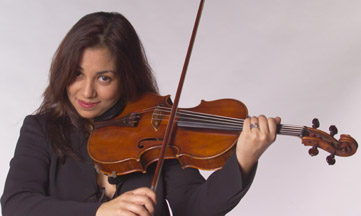
Subscribe to:
Posts (Atom)


 Posts
Posts


